
Betonwerk
Die SinoTech-Luton-Betonanlage ist das Rückgrat einer effizienten und hochwertigen Betonproduktion. Unsere Anlagen sind für eine Vielzahl von Anwendungen konzipiert, darunter der Bau von Gebäuden, Brücken, Straßen und anderen Infrastrukturprojekten.
Hier sind die wichtigsten Modelle, die wir verkaufen:
Nass-/Trockenmisch-Betonanlage;
Band-/Skip-Hopper-Betonanlage;
Mobile/Container-Betonanlage (stationär)
Die robuste Konstruktion unserer Betonmischanlage garantiert Langlebigkeit, und unser individueller Kundenservice stellt sicher, dass Sie eine Anlage erhalten, die genau auf Ihre spezifischen Anforderungen zugeschnitten ist.
Jetzt kostenloses Angebot anfordern!

Betonmischanlage
Erleben Sie uneingeschränkte Effizienz und Produktivität mit unseren Betonanlagen, die speziell entwickelt wurden, um die vielfältigen Anforderungen von Bauprojekten zu erfüllen. Unser Angebot umfasst stationäre und mobile Betonanlagen, wobei jede für bestimmte Anwendungsbereiche optimiert ist. Mit unseren Betonanlagen profitieren Sie von reduzierten Personalkosten, kürzeren Projektlaufzeiten und einer hervorragenden Betonqualität. Investieren Sie noch heute intelligent in Ihr Unternehmen.
Theoretische Leistung:
25–240 m³/h
Stark nachgefragte Betonanlagenmodelle
Unsere hochmodernen Betonanlagen – sowohl in stationärer als auch mobiler Ausführung – sind so konstruiert, dass sie hochwertigen Beton mit Präzision und Konsistenz liefern.
Derzeit sind zwei Hauptmodelle erhältlich, darunter:
Mobile Betonanlage und Stationäre Betonanlage (einschließlich Container-Betonanlage, Bandförderer-Betonanlage, Skip-Hopper-Betonanlage, Trockenmisch-Betonanlage)
Dank robuster Konstruktion, automatisierter Steuerung und energieeffizientem Design gewährleisten unsere Anlagen eine gesteigerte Produktivität, niedrigere Personalkosten sowie kürzere Projektabläufe.
Ob Sie ein kleineres Wohnbauprojekt oder eine groß angelegte kommerzielle Entwicklung durchführen – unsere Betonanlagen bieten stets die perfekte Lösung, um Ihre Anforderungen zu erfüllen.
Entdecken Sie unser Sortiment und investieren Sie in eine Lösung, die Ihrer Bauprozessqualität, Zuverlässigkeit und Kostenwirksamkeit neue Maßstäbe setzt.

STLTG-Mobile Betonanlage
Modelle:
YHZS25 ~ YHZS120
Leistung Kapazität:
25 m³/h – 120 m³/h
Fassungsvermögen des Betonmischers:
500–2000 L
Unsere mobilen Betonanlagen sind für optimale Leistung konzipiert und ermöglichen die Herstellung hochwertigen Betons direkt an Ihrem Baustellenstandort – Zeit- und Transportkosten werden so eingespart. Diese Anlagen zeichnen sich durch ein kompaktes Design für einfache Mobilität, automatisierte Steuerung für höchste Präzision sowie energieeffiziente Mechanismen für Wirtschaftlichkeit aus.
Ideal für Projekte mit wechselnden Standorten sorgen sie für eine kontinuierliche, zuverlässige Bereitstellung von Fertigbeton und steigern so Ihre Produktivität sowie die Einhaltung Ihrer Projekttermine. Entdecken Sie unser Sortiment mobiler Betonanlagen und investieren Sie in eine Lösung, die Ihrem Bauprozess beispiellose Komfortabilität und Qualität bietet.
Empfohlene Modelle:
YHZS-25 Mobile Betonanlage für kleine Projekte
YHZS-120 Mobile Betonanlage für große Projekte
YHZS-25 Mobile Betonanlage

Theoretische Leistungskapazität: 25 m³/h
Entleistungskapazität: 60 × 500 L
YHZS-35 Mobile Betonanlage

Theoretische Leistungskapazität: 35 m³/h
Entleistungskapazität: 60 × 750 L
YHZS-60 Mobile Betonanlage

Theoretische Leistungskapazität: 50 m³/h
Entleistungskapazität: 60 × 1000 L
YHZS-75 Mobile Betonanlage

Theoretische Leistungskapazität: 75 m³/h
Entleistungskapazität: 60 × 1500 L
YHZS-90 Mobile Betonanlage

Theoretische Leistungskapazität: 90 m³/h
Entleistungskapazität: 60 × 2000 L
YHZS-120 Mobile Betonanlage

Theoretische Leistungskapazität: 120 m³/h
Entleistungskapazität: 60 × 2500 L

Container-Betonanlage
Modelle:
LTC-60 ~ LTC-240
Kapazität:
60–240 m³/h
Entleistungsvolumen des Mischers:
1000–4000 L
Unsere Container-Typ-Betonanlage ist eine revolutionäre Lösung, die speziell darauf ausgelegt ist, Ihre Bauanforderungen effizient zu erfüllen. Dieses innovative System bietet beispiellose Komfortvorteile und vereint robuste Leistung mit einfacher Transportierbarkeit. Dank ihres kompakten, containerförmigen Designs gewährleistet sie einen nahtlosen Transport und eine schnelle Inbetriebnahme. Sie ist mit fortschrittlichen automatisierten Steuerungen ausgestattet, um Präzision und Konsistenz bei der Betonproduktion zu garantieren.
Die hervorragende Energieeffizienz und hohe Ausbringungskapazität der Anlage machen sie zur idealen Wahl für Großprojekte. Erleben Sie ein neues Produktivitäts- und Kosteneffizienzniveau mit unserer Container-Typ-Betonanlage. Ihr Bauvorhaben – unser Engagement.
Empfohlene Modelle:
LTC-60-Container-Betonanlage – eine kostengünstige Wahl
LTC-180-Container-Betonanlage für Bauprojekte
LTC-60-Container-Betonanlage

Theoretische Kapazität: 60 m³/h
Entleistungsvolumen des Mischer: 1000 L
LTC-90-Container-Betonanlage

Theoretische Kapazität: 90 m³/h
Entleistungsvolumen des Mischer: 1500 L
LTC-120-Container-Betonanlage

Theoretische Kapazität: 120 m³/h
Entleistungsvolumen des Mischer: 2000 L
LTC-180-Container-Betonanlage

Theoretische Kapazität: 180 m³/h
Entleistungsvolumen des Mischer: 3000 L

Bandförderer-Betonanlage
Modelle:
HZS60 ~ HZS240
Kapazität:
60–240 m³/h
Entleistungskapazität des Mischer:
1000–4000 L
Dieses fortschrittliche System wurde entwickelt, um Ihre Abläufe zu optimieren, und bietet konsistente, hochwertige Betonproduktion mit beeindruckender Geschwindigkeit. Sein charakteristisches Merkmal – der Bandförderer – sorgt für einen reibungslosen und schnellen Transport von Zuschlagstoffen und minimiert so Stillstandszeiten sowie steigert die Produktivität.
Ausgestattet mit automatisierten Steuerungen für höchste Präzision garantiert diese Anlage die Konsistenz Ihrer Betonmischung. Ihr robustes Design und ihre hohe Kapazität bewältigen problemlos Großprojekte. Entscheiden Sie sich für unsere Bandförderer-Betonanlage und heben Sie Ihren Bauprozess auf ein neues Niveau an Effizienz und Zuverlässigkeit.
Empfohlene Modelle:
HZS120-Bandförderer-Typ-Betonanlage – eine kosteneffiziente Wahl
HZS240-Bandförderer-Typ-Betonanlage für Großprojekte
HZS60-Bandförderer-Typ-Betonanlage

Theoretische Kapazität: 60 m³/h
Mischer-Typ: JS1000
HZS90-Bandförderer-Typ-Betonanlage

Theoretische Kapazität: 90 m³/h
Mischer-Typ: JS1500
HZS120-Bandförderer-Typ-Betonanlage

Theoretische Kapazität: 120 m³/h
Mischer-Typ: MAO3000/2000
HZS180-Bandförderer-Typ-Betonanlage

Theoretische Kapazität: 180 m³/h
Mischer-Typ: MAO4500/3000
HZS240-Bandförderer-Typ-Betonanlage

Theoretische Kapazität: 240 m³/h
Mischer-Typ: MAO6000/4000

Skip-Hopper-Betonanlage
Modelle:
HZS25 ~ HZS120
Kapazität:
25–120 m³/h
Entleistungsvolumen:
500–2000 L
Diese hochmoderne Anlage nutzt einen Skip-Hopper-Mechanismus, um den Lade- und Mischprozess zu optimieren und konsistenten, hochwertigen Beton sicherzustellen. Ihr kompaktes Design macht sie ideal für Baustellen mit begrenztem Platzangebot, während die fortschrittlichen automatisierten Steuerungen eine einfache Bedienung ermöglichen.
Mit ihrer robusten Konstruktion und energieeffizienten Auslegung liefert die Skip-Hopper-Betonanlage eine überlegene Leistung – selbst unter anspruchsvollsten Bedingungen. Erleben Sie unübertroffene Produktivität und Qualität mit unserer Skip-Hopper-Betonanlage – die optimale Wahl für kleine bis mittlere Bauprojekte.
Empfohlene Modelle:
HZS25-Skip-Typ-Betonanlage für kleinste Projekte
HZS75-Skip-Typ-Betonanlage – eine kosteneffiziente Wahl
HZS25-Skip-Typ-Betonanlage

Theoretische Kapazität: 25 m³/h
Mischer-Typ: JS500
HZS35-Skip-Typ-Betonanlage

Theoretische Kapazität: 35 m³/h
Mischer-Typ: JS750
HZS50-Skip-Typ-Betonanlage

Theoretische Kapazität: 50 m³/h
Mischer-Typ: JS1000
HZS75-Sprungschaufel-Betonanlage

Theoretische Leistung: 75 m³/h
Mischer-Typ: JS1500
HZS100-Sprungschaufel-Betonanlage

Theoretische Leistung: 100 m³/h
Mischer-Typ: JS2000

Trockenmischbetonanlage
Modelle:
HZSG25 bis HZSG100
Kapazität:
40–180 m³/h
Zuschlagstoffdosierer:
PLD800–PLD3200
Unsere Trockenmischbetonanlage mischt die trockenen Komponenten gezielt, bevor sie zur Baustelle transportiert werden, wo dann Wasser zugegeben wird – so wird die maximale Festigkeit und Haltbarkeit des Betons gewährleistet. Das innovative Design der Trockenmischbetonanlage ermöglicht eine präzise Steuerung der Mischung und garantiert bei jeder Charge Konsistenz. Ihre robuste Konstruktion und automatisierten Steuerungen machen sie zur zuverlässigen Wahl für Großprojekte.
Erleben Sie die Kraft von Präzision und Effizienz mit unserer Trockenmischbetonanlage – die bevorzugte Wahl für Projekte, bei denen höchste Betonqualität und -leistung gefordert sind.
Empfohlene Modelle:
HZSG35-Trockenmischbetonanlage für kommerzielle Zwecke
HZSG90-Trockenmischbetonanlage für Bauprojekte
HZSG35-Trockenmischbetonanlage

Theoretische Kapazität: 35 m³/h
Passender Zuschlagstoffdosierer: PLD1200
HZSG50-Trockenmischbetonanlage

Theoretische Kapazität: 50 m³/h
Passender Zuschlagstoffdosierer: PLD1600
HZSG60-Trockenmischbetonanlage

Theoretische Kapazität: 60 m³/h
Passender Zuschlagstoffdosierer: PLD1600
Spezifikationen für Betonanlagen
Detaillierte Spezifikationen der mobilen Betonanlage:
| Typ | YHZS25 | YHZS35 | YHZS50 | YHZS75 | YHZS100 | |
| Theoretische Produktionskapazität (m³/h) | 25 | 35 | 50 | 75 | 100 | |
| Betonmischer | Typ | JS500 | JS750 | JS1000 | JS1500 | JS2000 |
| Entleerkapazität (L) | 500 | 750 | 1000 | 1500 | 2000 | |
| Korngröße (Kies/Schotter) (mm) | 80/60 | 80/60 | 80/60 | 80/60 | 80/60 | |
| Passender Zuschlagbunker | PLD800 | PLD1200 | PLD1600 | PL2400 | PLD3200 | |
| Wiegegenauigkeit | Zuschlag (kg) | ±2% | ±2% | ±2% | ±2% | ±2% |
| Zement (kg) | ±1% | ±1% | ±1% | ±1% | ±1% | |
| Flugasche (kg) | Optional | |||||
| Wasser (kg) | ±1% | ±1% | ±1% | ±1% | ±1% | |
| Zusatzmittel (kg) | ±0,1% | ±0,1% | ±0,1% | ±0,1% | ±0,1% | |
Warum in eine Betonanlage investieren?
Die Investition in eine Betonanlage kann aus mehreren Gründen eine kluge Entscheidung sein:
Kosteneinsparungen: Mit einer Betonanlage können Sie Ihren eigenen Beton direkt vor Ort herstellen und somit den Kauf von vorgemischtem Beton von externen Lieferanten entfallen lassen. Dies kann langfristig zu erheblichen Kosteneinsparungen führen – insbesondere bei Projekten mit hohem Betonverbrauch. Zudem ermöglicht der Eigentum an einer Anlage eine bessere Kontrolle über die Materialkosten, sodass Ressourcen optimal genutzt und Abfall minimiert werden können.
Flexibilität und Komfort: Mit einer Betonanlage haben Sie die Flexibilität, Beton jederzeit und an jedem gewünschten Ort herzustellen. Dies ist besonders vorteilhaft bei Großprojekten oder Baustellen in abgelegenen Gebieten, wo der Zugang zu Betonlieferanten eingeschränkt sein kann. Sie sind nicht von externen Zeitplänen oder Lieferbedingungen abhängig und erhalten dadurch eine größere Kontrolle über Projekttermine und Arbeitsabläufe.
Qualitätskontrolle: Durch den Besitz einer Betonanlage können Sie eine konsistente und zuverlässige Betonqualität sicherstellen. Sie haben die Möglichkeit, die Mischungsanteile zu überwachen und anzupassen, um sicherzustellen, dass der Beton Ihren spezifischen Projektanforderungen entspricht. Diese Qualitätskontrolle trägt dazu bei, dauerhaften und statisch belastbaren Beton zu liefern und das Risiko von Bauausfällen oder -problemen zu reduzieren.
Individualisierung: Eine Betonanlage ermöglicht es Ihnen, die Betonmischung für jedes Projekt individuell anzupassen. Sie können die Mischungsformel, die Anteile und die Zusatzstoffe entsprechend der gewünschten Festigkeit, Dauerhaftigkeit, Verarbeitbarkeit oder anderer Spezifikationen justieren. Diese Flexibilität ermöglicht es Ihnen, unterschiedliche Projektanforderungen zu erfüllen und so optimale Leistung und Ergebnisse zu erzielen.
Geschäftsmöglichkeit: Die Investition in eine Betonanlage kann zudem eine Geschäftsmöglichkeit schaffen. Sie ermöglicht es Ihnen nicht nur, Beton für eigene Projekte herzustellen, sondern auch Beton an andere Auftragnehmer oder Stakeholder in Ihrer Region zu liefern. Dies kann eine zusätzliche Einnahmequelle und ein Wachstumstreiber für Ihr Unternehmen sein.
Umweltaspekte: Betonanlagen bieten Möglichkeiten für nachhaltige Bauweisen. Durch die Herstellung von Beton vor Ort werden CO₂-Emissionen im Zusammenhang mit dem Transport reduziert und der Einsatz von Verpackungsmaterialien minimiert. Zudem können umweltfreundliche Zusatzstoffe oder Recyclingverfahren integriert werden, wodurch die Nachhaltigkeit Ihrer Betonproduktion weiter gesteigert wird.

. Merkmale
Die Vorteile unserer Betonmischanlage
Hochwertige Betonproduktion: Unsere Betonanlage gewährleistet die Herstellung von hochwertigem Beton und verbessert so die Festigkeit und Haltbarkeit Ihrer Bauwerke. Die präzise Steuerung der Mischbestandteile führt bei jeder Produktion zu einer einheitlichen und konsistenten Ausgabe;
Effizienter Betrieb: Das fortschrittliche Automatisierungssystem der Anlage steigert die Produktivität, reduziert manuelle Eingriffe und ermöglicht die Herstellung großer Betonmengen in kürzerer Zeit. Diese Effizienz beschleunigt Projektzeiträume und senkt die Gesamtkosten;
Zuverlässige Leistung: Aufgrund ihrer robusten Konstruktion und der Verwendung hochwertiger Materialien bietet unsere Betonanlage einen zuverlässigen, unterbrechungsfreien Betrieb. Diese Zuverlässigkeit gewährleistet minimale Ausfallzeiten und maximiert die Produktivität Ihres Projekts;
Umweltfreundlich: Unsere Anlage erfüllt strenge Umweltstandards und verfügt über speziell entwickelte Merkmale zur Minimierung von Staub- und Lärmbelastung. Dieses Engagement für Nachhaltigkeit macht unsere Anlage zu einer verantwortungsvollen Wahl für Ihre Projekte.
Mobile Betonanlage oder stationäre Betonanlage?

- Flexibilität: Kann problemlos an verschiedene Baustellen verlegt werden und bietet ein hohes Maß an Flexibilität.
- Produktionskapazität:25 m³/h bis 100 m³/h
- Installation: Kann schnell aufgestellt und ohne Fundament erneut verlegt werden.
- Aufbauzeit: Kurze Aufbauzeit (7–45 Tage).
- Anwendungen: Mobile Mischanlagen eignen sich für vorübergehende Bauprojekte wie Straßeninstandhaltung, den Bau ländlicher Straßen, temporäre Baustellen sowie kleinere Gebäudeprojekte.
- Geeignet für: Hochvolumige Produktion für Gewerbegebäude.
- Für wen geeignet: Kleine Bauunternehmer, KMU-Bauunternehmen, Kommunalverwaltungen, Gerätevermietungsunternehmen und selbstständige Bauherren.

- Flexibilität: Aufgrund ihrer festen Bauart ist eine Verlagerung nach der Installation schwierig, wodurch die Flexibilität geringer ist.
- Produktionskapazität:25 m³/h bis 240 m³/h
- Installation: Erfordert eine feste Installation mit Fundament.
- Aufbauzeit: Längere Aufbauzeit (10–60 Tage).
- Anwendungen: Stationäre Betonanlagen eignen sich für Großprojekte im Infrastrukturbereich, wie Autobahnen, große gewerbliche und Wohnbauprojekte sowie langfristige industrielle Vorhaben.
- Für wen geeignet: Bauunternehmen, Generalunternehmer, Behörden (für große öffentliche Bauvorhaben), Immobilienentwickler, Fertigbetonlieferanten sowie großflächige gewerbliche Bauherren.
Hauptsysteme einer Betonmischanlage

Mischsystem
Unsere mobilen, stationären, zentralgemischten und Transportbetonanlagen sind mit einem Zwangsmischer ausgestattet, der aufgrund seiner hervorragenden Mischleistung und Vielseitigkeit bei der Verarbeitung sowohl standardmäßiger als auch spezieller Betonrezepturen ausgewählt wurde. Der Zwangsmischer gewährleistet eine konsistente, hochwertige Betonproduktion innerhalb unserer Mischanlagen. Kunden können zudem einen Trommelmischer oder Planetenmischer spezifizieren, um den besonderen Anforderungen ihrer Projekte gerecht zu werden.
Lagersystem
In der Regel werden Gesteinskörnungen im Freien gelagert, während Pulverstoffe in geschlossenen Silos und Zusatzmittel in stählernen Behältern untergebracht werden. Zement wird in Zementsilos gelagert, die über eine digitale Anzeige zur genauen Überwachung des Zementstandes verfügen. Unsere Zementsilos sind in Kapazitäten von 20 bis 200 Tonnen erhältlich und können individuell an die spezifischen Kundenanforderungen angepasst werden.
Wiegesystem
Das System gliedert sich in drei Hauptkomponenten: Gewichtung von Gesteinskörnungen, Gewichtung von Pulverstoffen und Gewichtung von Flüssigkeiten. Zu den Gesteinskörnungen zählen Grobkorn, Feinkorn und Sand; zu den Flüssigkeiten zählen Wasser und flüssige Zusatzmittel; zu den Pulverstoffen zählen Zement, Flugasche und Schlacke. Alle Wägevorgänge erfolgen simultan und werden über ein Computersystem gesteuert. Der Anwender kann die gewünschten Mischverhältnisse entsprechend den jeweiligen Anforderungen in den Computer eingeben.
Dosiersystem
Unsere Betondosiermaschine ist in der Lage, zwischen drei und sechs Arten von Gesteinskörnungen – darunter Sand, Gestein, Kies, Flugasche und Zement – zu mischen. Wir möchten betonen, dass unsere Gesteinskörnungsdosiermaschine für eine hohe Betriebseffizienz konzipiert ist. Wir bieten Dosiermaschinen mit zwei, drei oder vier Behältern an, um unterschiedlichen Produktionsanforderungen gerecht zu werden.
Förderanlage
Die Förderanlage besteht aus drei wesentlichen Komponenten. Gesteinskörnungen werden mittels Schütten und Förderbändern transportiert. Das Schüttsystem bietet Vorteile wie geringen Platzbedarf beim Transport und Kosteneffizienz, während das Bandförderersystem sich durch hohe Effizienz und die Möglichkeit auszeichnet, große Entfernungen zu überbrücken. Wasser und flüssige Zusatzmittel werden mittels Pumpen befördert, und Zement wird über einen Schneckenförderer vom Zementsilo zum Betonmischer transportiert.
Steuerungssystem
Der Steuerraum unserer Betonmischanlage ist geräumig und gut beleuchtet und verfügt über eine Klimaanlage für ein angenehmes Arbeitsumfeld. Die Anlage wird über einen Mikrocomputer bedient, der dem Benutzer eine komfortable Schnittstelle für Betrieb und Wartung bietet. Im Falle eines Ausfalls des automatischen Steuerungssystems steht ein manuelles Bediensystem zur Verfügung, um den gesamten Betonmischprozess effektiv zu steuern.
Staubabsaugsystem
Das Staubabsaugsystem der Baustellen-Betonmischanlage besteht aus einem Staubabscheider und einer Staubabsaugleitung. Unsere Staubabsaugeinrichtung reinigt die Luft wirksam und sorgt so für ein saubereres Umfeld während der Betonherstellung. Dieses System verbessert deutlich die Gesamtqualität des Mischprozesses.
Wie funktioniert eine Betonanlage?
Eine Betonanlage, auch als Betonmischanlage bezeichnet, produziert Beton durch die Kombination verschiedener Zutaten. Der Prozess umfasst typischerweise folgende Schritte:
- Zuschlagstoffdosierung: Die erste Phase ist die Messung und Dosierung der Zuschlagstoffe wie Sand, Kies oder Schotter. Diese werden in separaten Behältern oder Fächern gelagert. Das Steuerungssystem der Anlage misst und dosiert präzise die erforderlichen Mengen jedes Zuschlagstoffs entsprechend der vorgegebenen Betonrezeptur.
- Zugabe von Zement und Zusatzmitteln: Zement, der als Bindemittel wirkt, wird in Silos oder siloähnlichen Behältern gelagert. Das Steuerungssystem der Anlage wiegt den erforderlichen Zementanteil ab und fügt ihn der Mischung hinzu. Ebenso werden in diesem Schritt alle erforderlichen Zusatzmittel – etwa Wasserverkürzer oder chemische Zusätze – zugegeben, um bestimmte Eigenschaften des Betons zu verbessern.
- Mischen: Sobald Zuschlagstoffe, Zement und Zusatzmittel korrekt zugeführt wurden, beginnt der Mischvorgang. Der Mischer der Anlage – sei es eine rotierende Trommel oder ein Doppelschachtmischer – vermischt die Komponenten gründlich zu einer homogenen Masse. Die Mischdauer wird üblicherweise gesteuert, um eine ordnungsgemäße Verdichtung und gleichmäßige Beschaffenheit sicherzustellen.
- Zugabe von Wasser: Während oder nach dem Mischen wird Wasser zugegeben, um die gewünschte Konsistenz des Betons zu erreichen. Das Steuerungssystem der Anlage regelt die Wassermenge, um das vorgegebene Wasser-Zement-Verhältnis einzuhalten – ein entscheidender Faktor für die gewünschte Festigkeit und Verarbeitbarkeit des Betons.
- Förderung und Ausgabe: Sobald der Mischvorgang abgeschlossen ist, wird der fertige Beton an die gewünschte Stelle gefördert. Dies erfolgt beispielsweise über ein Förderband, einen Gurtförderer oder andere Fördersysteme. Der Beton wird anschließend in Betonfahrzeuge, Betonpumpen oder andere Behälter entladen, um zum Baustellort transportiert zu werden.
- Reinigung und Wartung: Nach jeder Charge ist es wichtig, den Mischer, das Fördersystem und andere Komponenten der Anlage zu reinigen, um Kreuzkontaminationen zwischen verschiedenen Betonsorten zu vermeiden. Regelmäßige Wartung und Inspektionen der Anlage sind ebenfalls unerlässlich, um optimale Leistung und lange Lebensdauer sicherzustellen.
Der gesamte Prozess in einer Betonanlage wird sorgfältig von computergestützten Systemen gesteuert, die verschiedene Parameter überwachen und anpassen, um eine genaue Dosierung, ein gleichmäßiges Mischen und eine zuverlässige Qualitätskontrolle zu gewährleisten. Dadurch entsteht ein konsistenter, hochwertiger Beton, der die geforderten Spezifikationen für Bauprojekte erfüllt.
Ist eine Betonanlage dasselbe wie eine Mischanlage?
Ja, eine Betonanlage und eine Mischanlage bezeichnen dasselbe. Die Begriffe “Betonanlage”, “Mischanlage”, “Betonmisch-Anlage”, “Fertigbetonanlagen”, “RMC-Betonanlage” und “planta concretera movil” werden häufig synonym verwendet, um eine Einrichtung oder Anlage zu beschreiben, in der verschiedene Zutaten zu Beton kombiniert werden. Die Hauptfunktion einer Betonanlage bzw. Mischanlage besteht darin, die Bestandteile des Betons – also Zement, Zuschlagstoffe (wie Sand oder Kies), Wasser und Zusatzmittel – in den gewünschten Anteilen zu vermischen und so eine konsistente, sofort einsatzbereite Betonmischung herzustellen.
Lohnt sich der Kauf einer portablen und mobilen Betonmischanlage?
Tragbare und mobile Betonwerke sind für bestimmte Bauprojekte durchaus eine Überlegung wert, insbesondere dann, wenn Flexibilität, schnelle Inbetriebnahme und die Möglichkeit zur Betonherstellung direkt vor Ort erforderlich sind. Im Folgenden finden Sie einige wichtige Aspekte, die bei der Bewertung der Wirtschaftlichkeit einer Investition in tragbare und mobile Betonwerke zu berücksichtigen sind:
Flexibilität und Mobilität
- Tragbare und mobile Betonwerke bieten die Flexibilität, eine Betonproduktionsanlage direkt auf der Baustelle aufzubauen. Dadurch entfällt der Transport von Beton von einem zentralen Werk aus, was logistische Komplexität und Kosten reduziert.
Betonherstellung nach Bedarf
- Diese Anlagen ermöglichen eine Betonherstellung nach Bedarf, was für Projekte mit wechselnden Betonanforderungen oder solche, die unmittelbare Reaktionsfähigkeit auf Änderungen im Bauzeitplan erfordern, unverzichtbar sein kann.
Kosteneffizienz und Zeitersparnis
- Durch die Minimierung der Transportwege und die Optimierung des Betonherstellungsprozesses bieten tragbare und mobile Anlagen potenzielle Kosteneinsparungen und Zeitvorteile – was sie besonders vorteilhaft für Bauprojekte mit engen Budget- und Zeitvorgaben macht.
Abgelegene oder schwierig zugängliche Standorte
- In abgelegenen oder schwer zugänglichen Gebieten, wo der Zugang zu einem zentralen Betonwerk eingeschränkt ist, stellen tragbare und mobile Betonwerke eine autarke Lösung dar, die eine konsistente und zuverlässige Betonversorgung sicherstellt.
Flächennutzung und Umweltauswirkungen
- Diese Anlagen sind so konzipiert, dass sie die Flächennutzung optimieren und die Umweltauswirkungen minimieren – was sie für Projekte geeignet macht, die Nachhaltigkeit und eine effiziente Ressourcensteuerung priorisieren.
Projektbezogene Anforderungen
- Die Entscheidung für den Erwerb einer tragbaren oder mobilen Betonanlage sollte sich an den spezifischen Anforderungen des Bauprojekts orientieren, beispielsweise am erwarteten Betonbedarf, der Projektdauer sowie der Verfügbarkeit von Infrastruktur für die Montage vor Ort.
Zusammenfassend lässt sich sagen, dass die Anschaffung einer tragbaren oder mobilen Betonanlage je nach den individuellen Anforderungen und Rahmenbedingungen des jeweiligen Bauprojekts sinnvoll sein kann. Bei sorgfältiger Bewertung und sachgerechter Einsatzplanung bieten diese Anlagen erhebliche Vorteile hinsichtlich Flexibilität, Effizienz und Kostenwirksamkeit und stellen somit ein wertvolles Asset für Baubetriebe dar.
Für welche Bauprojekte ist eine Mini-Betonmischanlage erforderlich?
Wohnbauprojekte
- Mini-Betonanlagen eignen sich hervorragend für Wohnbauprojekte wie Einfamilienhäuser, Reihenhäuser oder kleine Mehrfamilienhäuser. Diese Projekte erfordern oft nur moderate Betonmengen, wodurch Mini-Betonanlagen eine effiziente und kostengünstige Lösung darstellen.
Sanierungs- und Umbauprojekte
- Sanierungs- und Umbauprojekte – insbesondere solche an kleineren Gebäuden oder einzelnen Bereichen größerer Bauwerke – profitieren vom Einsatz von Mini-Betonanlagen. Diese Anlagen sind ideal, um Beton direkt in lokal begrenzten Bereichen bereitzustellen, ohne umfangreiche Transportwege zu benötigen.
Landschafts- und Außenanlagenprojekte
- Kleine Betonanlagen sind besonders wertvoll für Landschafts- und Außenanlagenprojekte, etwa bei der Errichtung von Wegen, Terrassen, kleinen Stützmauern und anderen Außenanlagen, die Beton erfordern. Ihre kompakte Bauweise und Flexibilität machen sie für solche Anwendungen ideal.
Kleinere Infrastrukturprojekte
- Infrastrukturprojekte wie Fußgängerbrücken, kleine Durchlässe und kleinere Straßenreparaturen erfordern oft vergleichsweise geringe Betonmengen. Mini-Betonwerke können die Betonbedarfe dieser Projekte effizient decken und die richtige Mischung in der richtigen Menge liefern.
Gewerbliche Entwicklung mit begrenztem Platzangebot
- In Fällen, in denen gewerbliche Bauprojekte nur begrenzten Platz für die vorortige Betonherstellung bieten, stellen Mini-Betonwerke eine praktikable Lösung dar. Sie können effizient Beton für kleinere gewerbliche Entwicklungen bereitstellen.
Es ist wichtig zu beachten, dass die Eignung von Mini-Betonwerken für Bauprojekte von den spezifischen Anforderungen, dem Umfang und der Dauer jedes einzelnen Projekts abhängt. Während Mini-Betonwerke für bestimmte Bauarten deutliche Vorteile bieten, können Großprojekte oder solche mit höherem Betonbedarf eine Kombination aus Mini- und größeren Betonwerken zur optimalen Effizienz erfordern.
Arten von Betonwerken, die Sie wählen können
In der Bauindustrie werden verschiedene Arten von Mischanlagen eingesetzt, wobei jede Art spezifische Merkmale und Vorteile aufweist. Hier sind einige gängige Typen:
Stationäre Mischanlagen:
- Stationäre Mischanlagen sind für einen langfristigen Einsatz an einem festen Standort konzipiert.
- Sie sind in der Regel groß und verfügen über hohe Produktionskapazitäten, wodurch sie sich für Großbauprojekte eignen.
- Stationäre Anlagen bieten hohe Präzision und genaues Wiegen der Zutaten, um eine konsistente Betonqualität sicherzustellen.
- Diese Anlagen erfordern eine höhere Anfangsinvestition, zeichnen sich jedoch durch ihre langfristige Haltbarkeit und Zuverlässigkeit aus.
Mobile Mischanlagen:
- Mobile Mischanlagen sind transportabel und können problemlos an verschiedene Baustellen verbracht werden.
- Sie werden häufig auf Anhängern oder Rädern geliefert, was einen schnellen Aufbau und eine einfache Umsiedlung ermöglicht.
- Mobile Anlagen eignen sich für kleinere Bauprojekte oder solche, bei denen häufiger Standortwechsel erforderlich ist.
- Sie bieten Flexibilität und Komfort, doch ihre Produktionskapazität kann im Vergleich zu stationären Anlagen geringer sein.
Kompakte Mischanlagen:
- Kompakte Mischanlagen sind eine kleinere Variante stationärer Anlagen, die für Projekte mit begrenztem Platzangebot oder geringeren Produktionsanforderungen konzipiert sind.
- Sie vereinen die Vorteile stationärer und mobiler Anlagen und bieten hohe Präzision bei kleinerer Grundfläche.
- Kompakte Anlagen sind oft modular aufgebaut, was einen einfachen Zusammenbau und Abbau für Transport und Installation ermöglicht.
Turmmischanlagen:
- Turmmischanlagen verfügen über vertikale Lagervorratsbehälter für Gesteinskörnung, wodurch die Flächennutzung optimiert wird.
- Diese Anlagen eignen sich für Standorte mit begrenztem horizontalen Platzangebot, typischerweise in städtischen Gebieten.
- Turmanlagen verfügen häufig über fortschrittliche Automatisierungs- und Steuerungssysteme, um effiziente und präzise Mischvorgänge sicherzustellen.
Continuous Batching Plants:
- Continuous batching plants, also known as a continuous mixing plant, operate without interruption.
- They continuously produce concrete, eliminating the need for batching cycles.
- Continuous plants are suitable for large projects requiring a consistent supply of concrete.
- They offer high production rates and can provide customized mixes on-demand.
It’s important to consider factors like project requirements, production capacity, mobility, available space, and budget when selecting a batching plant. Each type has its advantages and is suitable for specific construction scenarios.
Dry Batch Plant VS. Wet Batch Plant
Dry batch plant and wet batch plant are two common types of concrete batching plants. Let’s compare them:
Dry Batch Plant:
- In a dry batch plant, all the ingredients, including aggregates, cement, and admixtures, are weighed and separately stored in different compartments.
- The materials are then transferred to a central mixer where they are mixed together.
- Dry batch plants use a transit mixer or concrete mixer truck to transport the mixed concrete to the construction site.
- This type of plant is suitable for projects that require less volume of concrete, have shorter construction timelines, or where the concrete is not required immediately after mixing.
- Dry batch plants are typically more cost-effective due to their simpler design and lower initial investment.
Wet Batch Plant:
- In a wet batch plant, all the ingredients, including aggregates, cement, and water, are mixed together in a central mixer.
- The water is added to achieve the desired consistency of the concrete mix.
- The mixed concrete is then transported to the construction site using a transit mixer or concrete mixer truck.
- Wet batch plants are suitable for projects that require a large volume of concrete, have longer construction timelines, or where immediate availability of the concrete mix is required.
- Wet batch plants often offer better consistency and control over the concrete mix due to the simultaneous mixing of all ingredients.
Each type of plant has its advantages and considerations based on specific project requirements and constraints. Factors such as project scale, timeline, concrete volume, and transportation logistics need to be considered when selecting the most suitable batching plant for a construction project.
Experienced Manufacturer for Concrete Mixing Plant Export Trade
Our concrete plant has been successfully exported to a wide array of countries, including Oman, the Philippines, Fiji, Canada, Zimbabwe, Peru, Mexico, Saudi Arabia, Cyprus, Antigua and Barbuda, Bahamas, Dominican Republic, Zimbabwe, Kiribati, Malaysia, South Sudan, Norway, Trinidad and Tobago, New Zealand, Jamaica, Indonesia, Papua New Guinea, Colombia, Guyana, Solomon Islands, Suriname, Turks and Caicos Islands, Bermuda, United States Virgin Islands, Bolivia, Dominica, Kenya, Tanzania, East Timor, Solomon, Vanuatu, Peiji, Tonga, Mexico, Colombia, Belize, Guatemala, El Salvador, Jamaica, Dominica, Saint Lucia, Saint Vincent, Trinidad and Tobago, Guyana, Ecuador, and Uruguay. This extensive distribution showcases the adaptability, quality, and reliability of our concrete plant in diverse construction environments across the globe.
Choosing the Right Batching Plant Manufacturer

Selecting the appropriate batching plant manufacturer is crucial for ensuring the success of your concrete production operations. Here are some key considerations to keep in mind when making your choice:
Reputation and Experience
Look for a manufacturer with a proven track record in the industry. A reputable company will have extensive experience in designing and producing high-quality batching plants.
Quality and Reliability
Ensure that the manufacturer adheres to strict quality control standards and uses durable materials in their equipment. Reliable machines minimize downtime and maintenance costs, leading to a more efficient production process.
Customization Options
Choose a manufacturer that offers customizable solutions to meet your specific project requirements. The ability to tailor batching plants to your unique needs can enhance operational efficiency and product quality.
Technology and Innovation
Opt for a manufacturer that invests in the latest technology and innovations. Advanced control systems, automation, and energy-efficient designs can significantly improve your batching operations.
Support and Service
A good manufacturer should provide comprehensive support, including installation, training, and ongoing maintenance services. Look for companies that offer a strong warranty and customer service to ensure you receive prompt assistance when needed.
Cost-Effectiveness
Evaluate the overall value rather than just the initial price. Consider the long-term operational costs, including maintenance, efficiency, and energy consumption, to determine the best investment.
Why Choose STLTG?
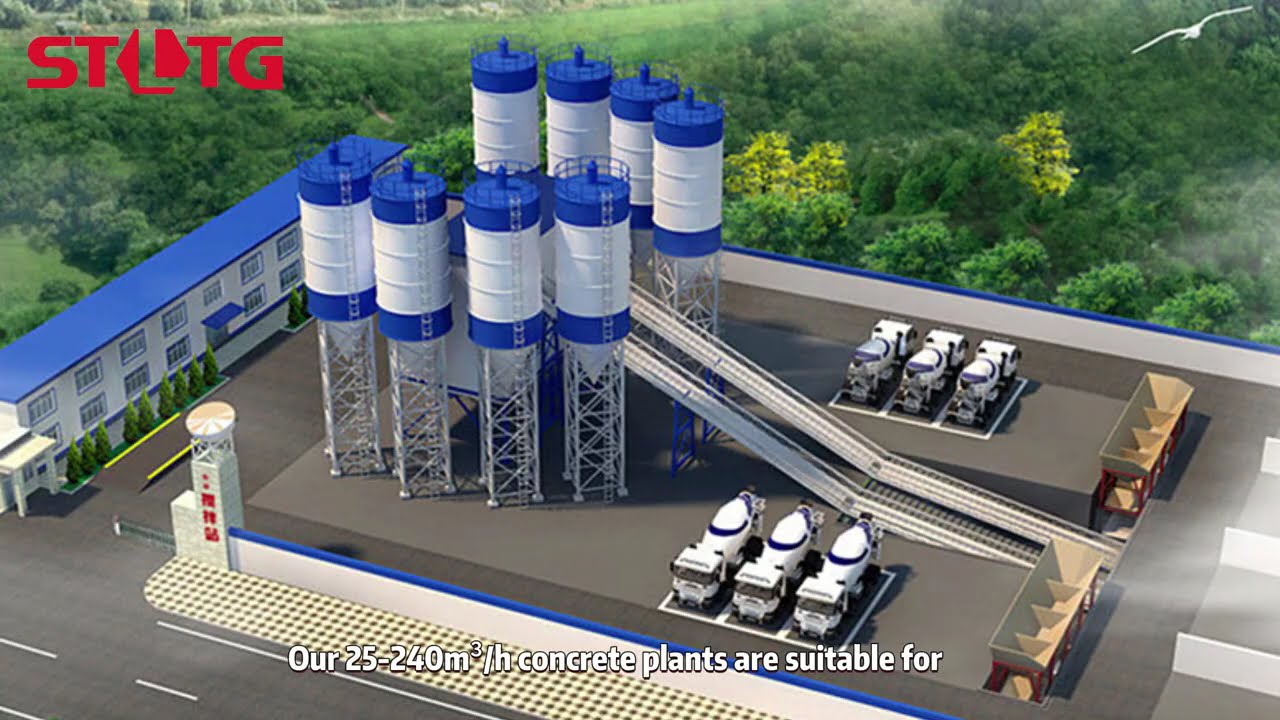
When considering a batching plant manufacturer, we invite you to choose our company for several compelling reasons:
- Proven Expertise: With years of experience in the concrete industry, we have designed and manufactured a wide range of batch plants that deliver exceptional performance and reliability.
- High-Quality Standards: Our commitment to quality is unwavering. We utilize the best materials and rigorous testing processes to ensure that our batching plants not only meet but exceed industry standards.
- Customized Solutions: We understand that every project is unique. Our engineering team collaborates with clients to design customizable batching plants tailored to their specific needs, ensuring maximum efficiency and productivity.
- State-of-the-Art Technology: Our batching plants are equipped with the latest automation and control systems, enhancing precision, reducing waste, and improving overall operational efficiency.
- Comprehensive Support: We pride ourselves on providing outstanding customer service. From initial consultation and installation to training and ongoing maintenance, our dedicated support team is with you every step of the way.
- Competitive Pricing: We strive to offer cost-effective solutions that deliver excellent ROI. Our batching plants are designed to provide long-term savings through efficiency and durability.
Concrete Plant Price
| Modell | Preisspanne |
| Mobile Betonmischanlage zum Verkauf | $5.000 – $47.000 |
| Container-Betonanlage zum Verkauf | $12.000 – $50.000 |
| Bandförderer-Betonanlage zum Verkauf | $20.000 – $60.000 |
| Skip-Hopper-Betonanlage zum Verkauf | $15.000 – $80.000 |
| Trockenmisch-Betonanlage zum Verkauf | $10.000 – $500.000 |
| Nassmisch-Betonanlage zum Verkauf | $10.000 – $500.000 |
In unserer Betonanlage bieten wir eine breite Palette an Preisoptionen, wobei jeder Preis die einzigartigen Merkmale und Leistungsfähigkeiten unserer vielfältigen Produktpalette widerspiegelt.
Die Preise können je nach mehreren Faktoren variieren, darunter Kapazität der Anlage, Automatisierungsgrad, eingesetzte Technologie sowie optionale Ausstattungsmerkmale. Diese Preise dienen jedoch lediglich als Orientierungswerte.
Da jedes Projekt individuelle Anforderungen stellt, bieten wir einen umfassenden Individualisierungsservice an. Unser Team arbeitet eng mit Ihnen zusammen, um eine Anlage zu entwerfen und zu bauen, die Ihrem Budget entspricht und Ihre Erwartungen übertrifft. Investieren Sie in unsere Betonanlage und gewährleisten Sie kosteneffiziente, effiziente und hochwertige Betonproduktion, maßgeschneidert auf Ihre Bedürfnisse.
Weitere Informationen zu Kosten für Betonmischanlagen, Mini-Zementwerke und kleine Zementwerke erhalten Sie auf Anfrage – kontaktieren Sie uns, um das aktuellste Angebot zu erhalten.
Weitere Geräte, die Sie möglicherweise benötigen
Leistung: 40–320 t/h
Leistung: 30–88 m³/h
Nennleistung: 36,8–110 kW
Kapazität: 3–10 Tonnen
Fassungsvermögen: 1,2–6,5 m³
Globale Referenzprojekte
Stationary Concrete Plant In Australia

HZS270 Concrete Plant In Fiji

Mobile Concrete Plant in Kenya

Concrete Mixing Plant In Colombia

. Zertifizierungen
Unsere Zertifizierungen


. Kontakt
Seit 1992
Adresse
Zhengzhou, Provinz Henan, China
Postfach 71482, Mbezi Beach, Kibaki Road, Grundstück Nr. 238, Dar es Salaam – Tansania.
Telefon
+86 17513252158 (Büro in China)
+255756256789 (Büro in Tansania)
+86 18614956258 (Büro in China)
+255756256789 (Büro in Tansania)