
Soluzione per frantumazione e vagliatura
Gli impianti mobili STLTG garantiscono un throughput superiore nel granito, nella pietra calcarea e nei progetti di riciclaggio. Installabili in 2 ore e pronti per la frantumazione già oggi.
Mobilità su ogni terreno – Opzioni cingolate o su ruote progettate per le condizioni più estreme sul sito
Assistenza diretta dalla fabbrica – Squadre di ingegneri e ricambi disponibili 24/7
Ottieni subito un preventivo gratuito!

Impianto frantumatore STLTG
Gli impianti mobili di frantumazione sono attrezzature avanzate per la frantumazione di pietre, in grado di essere spostati con flessibilità e di operare direttamente sul sito di estrazione della materia prima.
Il nostro impianto frantumatore per pietre può elaborare una vasta gamma di materiali grezzi, tra cui ciottoli fluviali, pietra calcarea, rifiuti da costruzione, granito, minerale di ferro, basalto, gesso, ecc.
Capacità di produzione:
5–1000 t/h
Dimensione del materiale in alimentazione:
0–350mm
Tipologie di impianti mobili di frantumazione in vendita.

Gli impianti mobili di frantumazione possono essere classificati in due grandi categorie: impianti di frantumazione su ruote e impianti di frantumazione su cingoli.
Esistono inoltre numerose tipologie diverse di impianti portatili di frantumazione, classificabili in base al tipo di materiale da frantumare e al principio di funzionamento.

Impianto mobile su ruote STLTG.
Le linee di produzione mobili su ruote STLTG coprono pienamente i campi applicativi di rocce dure, rocce tenere e rifiuti da costruzione, con una capacità di trattamento di 100–300 ton/ora.
Sono particolarmente adatti a svariate applicazioni nei settori edilizio, minerario e della demolizione.
Caratteristiche:
Elevata capacità di trattamento.
Funzione flessibile di parcheggio.
Impianto mobile su ruote STLTG per frantumazione a mandibola.

Capacità: 85 – 650 t/h.
Dimensione massima del materiale in alimentazione: 500 – 800 mm.
Impianto mobile su ruote STLTG per frantumazione a impatto.

Capacità: 70 – 380 t/h.
Dimensione massima del materiale in alimentazione: 350 – 700 mm.
Impianto frantumatore conico mobile su ruote STLTG con vaglio vibrante

Lunghezza di trasporto: 14 500 – 16 000 mm.
Altezza di trasporto: 400 – 17 000 mm.
Macchina per la produzione di sabbia STLTG con vaglio vibrante

Lunghezza di trasporto: 13500–16500 mm
Altezza di trasporto: 4350–4480 mm
Stazione mobile frantumatrice a tre combinazioni STLTG

Capacità di trattamento: 100–350 t/h
Dimensione del materiale in alimentazione: ≤700 mm
Stazione mobile frantumatrice a quattro combinazioni STLTG

Capacità di trattamento: 130–180 t/h
Dimensione del materiale in alimentazione: ≤500 mm

Impianto frantumatore mobile su cingoli STLTG
La stazione frantumatrice mobile su cingoli idraulici STLTG è un’attrezzatura per la frantumazione e la vagliatura, sviluppata introducendo la tecnologia di una famosa azienda mondiale nel settore minerario.
Adotta un sistema idraulico per il movimento dei cingoli che ne garantisce un funzionamento regolare e la capacità di adattarsi a varie condizioni operative complesse.
Caratteristiche:
Risparmio energetico
Frantumazione di vari materiali
Impianto frantumatore mobile su cingoli STLTG con mandibola

Capacità: 350–450 t/h
Velocità: 0–20 m/min
Impianto frantumatore mobile su cingoli STLTG a impatto

Capacità: 130–350 t/h
Velocità: 0–20 m/min
Impianto frantumatore mobile su cingoli STLTG per frantumazione grossolana

Capacità: 100–580 t/h
Apertura di scarico: 40–200 mm
Impianto vagliatore mobile su cingoli STLTG

Capacità: 130–350 t/h
Apertura di scarico: ≤25 mm
Impianto frantumatore mobile su cingoli STLTG per frantumazione media e fine

Capacità: 75–350 t/h
Dimensione della maglia: 5–80 mm
Soluzioni frantumatrici STLTG per diversi materiali e diversa durezza
Gli impianti mobili STLTG sono progettati per elaborare i minerali più resistenti al mondo e i materiali riciclati con massima efficienza e minima usura.
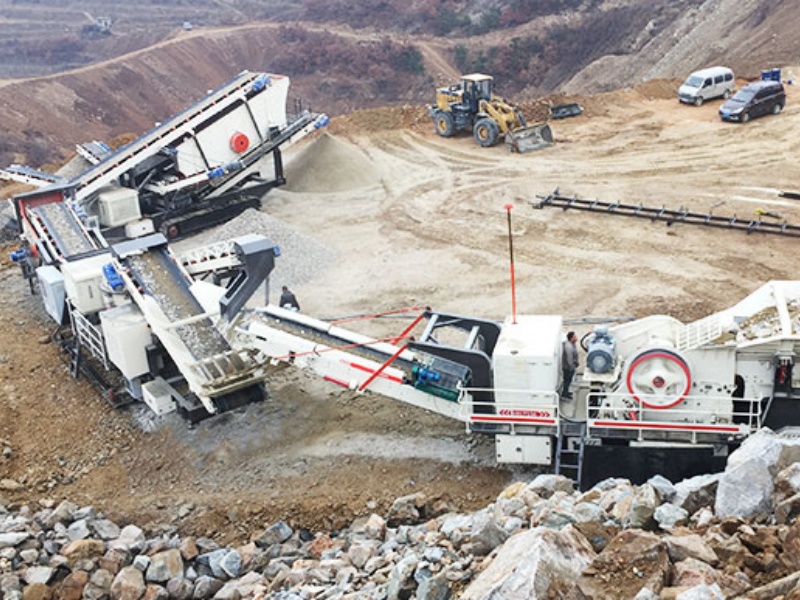
Rocce dure e abrasive
Materiali da trattare: Granito, basalto, minerale di ferro, quarzite
Vantaggio STLTG: Dotato di rivestimenti in lega ad alto contenuto di manganese e di un telaio rinforzato pesante per resistere alle forze di frantumazione più estreme.
I vostri vantaggi: Riduzione dei tempi di fermo per manutenzione e prolungamento della vita utile dei componenti usurabili fino al 25% in ambienti ad alta abrasività.
Attrezzature consigliate:
Configurazione STLTG consigliata: Frantumatore mobile a mandibola (primario) + Frantumatore mobile a cono (secondario)
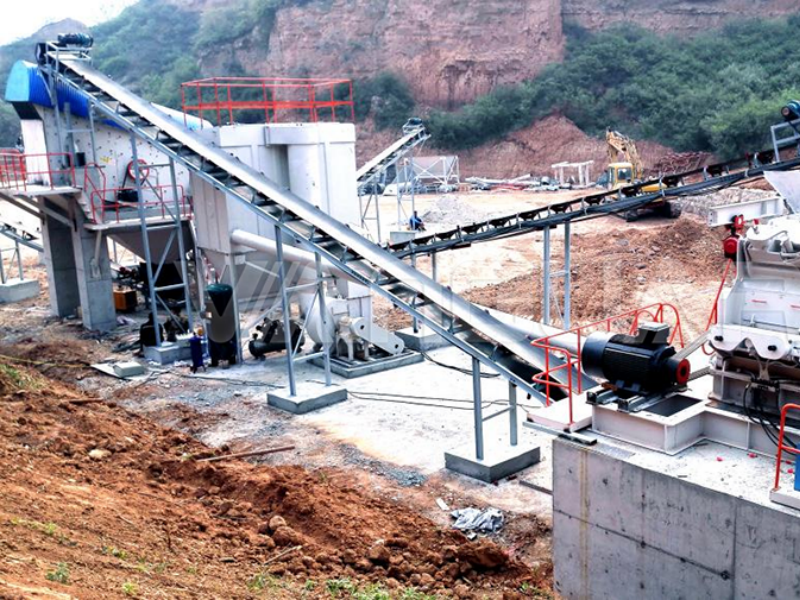
Rocce di durezza morbida e media
Trattamento Materiali: Calcare, ciottoli di fiume, carbone, gesso
Vantaggio STLTG: Geometria ottimizzata della camera di frantumazione progettata per massimizzare la portata e ottenere una forma superiore dei granuli.
I vostri vantaggi: Ottenere un’alta produzione volumetrica (fino a 500 TPH) con prodotti finali perfettamente cubici conformi agli severi standard edilizi.
Attrezzature consigliate:
Configurazione STLTG consigliata: Frantumatore mobile a mandibola (primario) + Frantumatore mobile ad impatto (secondario)
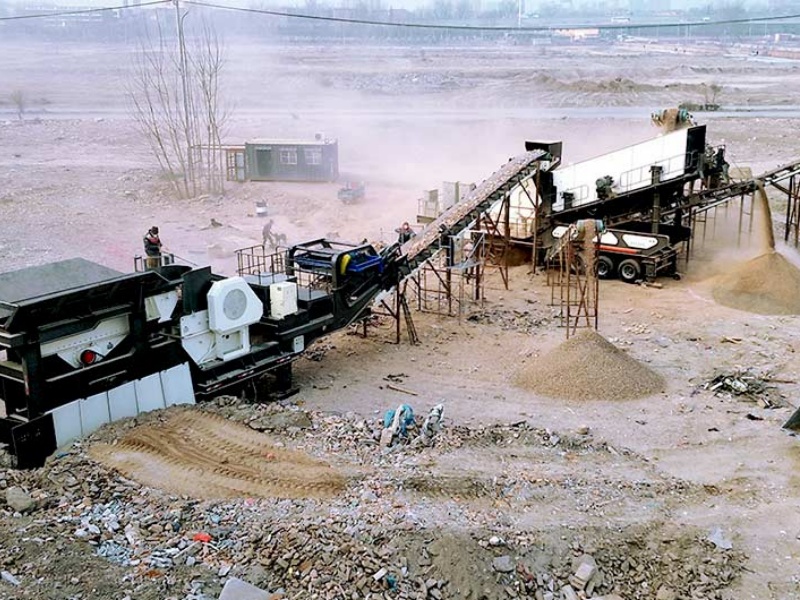
Rifiuti da costruzione e riciclo
Trattamento Materiali: Macerie di calcestruzzo, asfalto, mattoni, rifiuti da demolizione
Vantaggio STLTG: Separatori magnetici integrati e sistema avanzato di soppressione della polvere per un funzionamento urbano pulito ed ecologico.
I vostri vantaggi: Trasformare i “rifiuti” in “valore” in loco. Eliminare i costi di discarica e produrre immediatamente aggregati riciclati di alta qualità.
Attrezzature consigliate:
Configurazione STLTG consigliata: Frantumatore mobile ad impatto (tutto-in-uno) + Separatore magnetico
Specifiche tecniche dell’impianto di frantumazione mobile
Specifiche dettagliate dell’impianto di frantumazione mobile su cingoli a mandibola:
| Modello | STLTG96 | STLTG106 |
| Volume del serbatoio | 5 m³ | 8 m³ |
| Alimentatore | GZDT9538 | GZDT1145 |
| Frantumatore a mandibola | CJ96 | CJ106 |
| Nastro trasportatore principale | B800X10m | B1000X11.5m |
| Nastro trasportatore laterale (opzionale) | B500X3.2m | B650X3.5m |
| Separatore ferroso (opzionale) | RCYD650 | RCYD800 |
| Caterpillar | 400X3.8m | 500X3.8m |
| Velocità | 0-20 m/min | 0-20 m/min |
| Capacità di arrampicata | ±30° | ±30° |
| Potenza del motore | 96 kW | 106 kW |
| Potenza totale | 112,9 kW | 141,4 kW |
| Dimensioni complessive | 3,5 m x 3,4 m x 2,8 m | 14,4 m × 3,6 m × 3,0 m |
| Peso | 38 t | 52,5 t |
| Capacità | 300 t/h | 450 t/h |
Visualizza le soluzioni per le diverse fasi di frantumazione

L’impianto di frantumazione secondaria si concentra su un ulteriore trattamento fine dei materiali per garantire una granulometria uniforme e soddisfare requisiti di maggiore precisione. È inoltre disponibile la stazione mobile per la produzione di sabbia, la modellatura e la vagliatura, in grado di produrre in modo efficiente sabbia artificiale di alta qualità e di accrescere il valore dei materiali.

Impianto di frantumazione primaria
Può operare in autonomia o in combinazione con più unità, realizzando così combinazioni funzionali quali frantumazione monostadio, frantumazione gerarchica multistadio e vagliatura.
Caratteristiche:
Espansione del gruppo elettrogeno
Piccolo raggio di sterzata
Panoramica dei vantaggi
Set completo di unità: prestazioni eccellenti dell’intero set, configurazione ragionevole e compatta e ridotte esigenze relative al sito di lavoro.
Elevata mobilità: struttura compatta dell’intero set, piccolo raggio di sterzata, facile da trasferire, entrare ed uscire dal sito di lavoro.
Risparmio energetico ed elevata efficienza: il frantoio mobile può entrare direttamente nel vostro cantiere, riducendo i trasporti delle materie prime e quindi i costi di trasporto.
Configurazione diversificata: varie configurazioni personalizzate delle unità, sia in funzionamento monostadio che multistadio, fornite in base alle diverse richieste dei clienti e alla situazione reale, per realizzare frantumazione monostadio e frantumazione gerarchica multistadio con vagliatura.
Estensioni del gruppo elettrogeno: il frantoio mobile può essere dotato di un gruppo elettrogeno per soddisfare i normali requisiti operativi anche in assenza di corrente elettrica o in caso di interruzioni di alimentazione e altre situazioni complesse, garantendo così una produzione continua.
Assistenza tecnica, prestazioni superiori e stabilità: quasi 40 anni di tecnologia ed esperienza nel settore delle attrezzature minerarie hanno permesso di realizzare un frantoio mobile con struttura semplice, razionale e compatta. Rigorosi controlli in fabbrica garantiscono l’eccellente qualità della nostra macchina.

IMPIANTO MOBILE DI FRANTUMAZIONE E VAGLIATURA SECONDARIA
Nell’applicazione della stazione di frantumazione mobile, per la frantumazione fine a due o tre stadi, il frantoio a impatto ad alte prestazioni e ad alta capacità oppure la stazione mobile a cono serie CS, S (monocilindrica) e HP (serie S) consente di ottenere elevata produttività, alto rapporto di frantumazione e migliore forma granulare. Combinando corsa di frantumazione, velocità di frantumazione e forma della camera di frantumazione, questa combinazione si è dimostrata superiore rispetto ai tradizionali frantoi a cono in termini di prestazioni, efficienza, capacità produttiva e qualità del prodotto finito.
Caratteristiche:
Alto rapporto di riduzione
Flessibilità nella configurazione
Panoramica dei vantaggi
Alto rapporto di riduzione: frantuma efficacemente materiali di grandi dimensioni, parzialmente frantumati, in pezzi molto più piccoli, consentendo un controllo preciso sulla dimensione finale del prodotto.
Miglioramento della qualità del prodotto: le capacità di vagliatura precise separano le diverse granulometrie, garantendo un prodotto finale coerente e di alta qualità.
Versatilità: in grado di trattare una vasta gamma di materiali con diversi livelli di durezza, rendendolo adatto a molteplici applicazioni.
Elevata capacità: progettato per elaborare grandi volumi di materiale in modo efficiente, massimizzando la produzione.
Forma cubica del prodotto: i frantoi a impatto, spesso utilizzati nella frantumazione secondaria, producono particelle ben formate e cubiche, ideali per applicazioni di aggregati per calcestruzzo.
Funzionamento economico: il design ottimizzato riduce al minimo il consumo energetico e l’usura dei componenti, portando a costi operativi inferiori.
Manutenzione agevole: la progettazione accessibile e i componenti soggetti ad usura facilmente sostituibili permettono interventi di manutenzione rapidi e semplici.
Flessibilità nella configurazione: può essere personalizzato con diversi tipi di frantoi e configurazioni di vagliatura per soddisfare specifiche esigenze produttive.
Opzioni mobili: la disponibilità di impianti mobili di frantumazione e vagliatura secondaria offre flessibilità per cambiare località di progetto.

IMPIANTO MOBILE PER IL TRATTAMENTO DEI RIFIUTI DA COSTRUZIONE
L’impianto per il trattamento dei rifiuti da costruzione adotta una configurazione combinata, composta da un frantoio a mandibole, un frantoio a impatto, un frantoio a cono, un vagliatore vibrante e un nastro trasportatore. Sono disponibili due tipologie: una è un impianto mobile su cingoli, l’altra è un impianto mobile su ruote, consentendo ai clienti di scegliere in base alla situazione locale del cantiere.
Dopo essere stati selezionati, smaltiti e frantumati, la maggior parte dei materiali trattati dal nostro impianto mobile di frantumazione può essere riutilizzata come risorse rinnovabili, ad esempio acciaio da rottame, filo di ferro da rottame, filo scartato e vari componenti in acciaio da rottame. Dopo essere stati concentrati e riscaldati, questi materiali possono essere lavorati per produrre acciaio di diverse specifiche, mentre il bambù e il legno di scarto possono essere utilizzati per produrre legno artificiale. Inoltre, i mattoni, le pietre e il calcestruzzo frantumati possono sostituire la sabbia nell’intonaco per muratura e nell’intonaco di finitura, nonché per la produzione di blocchi, mattoni per pavimentazione e mattoni forati.
Caratteristiche:
Selezione e frantumazione senza soluzione di continuità
Elevata portata
Applicazioni dell’impianto mobile per il trattamento dei rifiuti da costruzione
Cantieri edili e di demolizione: Utilizzato per gestire i rifiuti generati dalle attività di costruzione e demolizione, trasformando i detriti in materiali riutilizzabili in loco.
Progetti di riqualificazione urbana: efficace nelle aree urbane dove lo spazio è limitato, consentendo un trattamento efficiente dei rifiuti senza la necessità di trasportare i materiali verso impianti distanti.
Progetti stradali e infrastrutturali: Adatto al trattamento dei rifiuti provenienti da lavori stradali e dallo sviluppo infrastrutturale, contribuendo alla produzione di materiali quali aggregati di base e materiali di riempimento.
Centri di riciclaggio: può essere impiegato presso impianti di riciclaggio per trattare i rifiuti edilizi in ingresso, migliorando complessivamente le capacità di riciclaggio.
Iniziative di deviazione dai discariche: Svolge un ruolo fondamentale nelle iniziative volte a ridurre i volumi di rifiuti edilizi inviati alle discariche, promuovendo il riciclaggio e il recupero delle risorse.
Produzione di materiali da costruzione ecocompatibili: i materiali trattati possono essere utilizzati per creare prodotti edilizi sostenibili, come aggregati di calcestruzzo riciclato, legno artificiale e mattoni ecocompatibili.
Frantumatori in primo piano STLTG utilizzati negli impianti di frantumazione
Gli impianti di frantumazione incorporano spesso una combinazione di questi tipi di frantumatori per ottenere le prestazioni di frantumazione desiderate e la qualità del prodotto finale.
The choice of crusher type in a crushing plant depends on factors such as feed material characteristics, desired product size, production capacity, and overall plant configuration.
Here is an overview of the featured crushers commonly used in crushing plants:
STLTG Cone Crusher

| Overload protection is stable and reliable with a spring-safety device. |
| The hydraulic cleaning chamber is simple and quick. |
| A hydraulic cylinder adjusts discharge opening. |
| More evenly linerwear. |
STLTG Vibrating Screen

| Screen angle 180° , higher screening efficiency |
| The exciter is an eccentric shaft and block structure that provides enough exciting force. |
| A wear-resistant rubber protective layer has been used at key parts to extend the service life of the screen. |
| Thin oil self-lubrication, replace oil once every 3-6 months. |
STLTG Vibrating Feeder

| Multi-layer and highly efficient vibrating screen. |
| Stable structure, strong exciting force. |
| Easy to maintain and durability. |
| Multi-layer and high efficient vibrating screen. |
STLTG CJ Series of Euro Jaw Crusher

| Welded fixed steel structure avoids defects. |
| Discharging outlet dash adjusting easily. |
| Unique fly design, machine run stably. |
| Deep-chamber crushing, no dead space. |
STLTG PE Jaw Crusher

| Large crushing ratio and Uniform discharge particle size. |
| Simple structure and low operation cost. |
| Low noise and little dust pollution. |
| Large and reliable adjusting range of the discharge outlet meets various requirements. |
STLTG Hammer Crusher

| Cost saving |
| Low energy saving |
| Wide range of the stone application |
| Medium-hard to soft materials |
STLTG Impact Crusher

| Big feeding inlet and high crushing chamber |
| With strong rigidity, the rotor has big rotary interia |
| Effectively control the discharging size |
| High chromium, larger impact force |
STLTG Sand Washer

| Reasonable structure, large processing capacity. |
| Wheel-type sand washer equipment and together work with sand making machine. |
| Low failure rate. |
| Wash off the stone powder and impurities mixed in sand. |
STLTG 6X Vertical Shaft Sand-Making Machine

| Adopts a overall new design of four-throw material port, which can improve the material throughput. |
| The transmission part of the equipment adopts a special sealing structure to prevent oi leakage from the bearing cylinder. |
| The simple structure of the lower part of the body effectively prevents the material from blocking the lower part of the body |
STLTG VSI Vertical Shaft Sand-Making Machine

| Lower cost and good performance decide that this kind of equipment is a preferred choice for artificial sand making or stone reshaping. |
| Large capacity and stable operation;,Low wearing parts consumption, Excellent product size. |
| Thin oillubrication, automatic maintenance and other features. |
STLTG Ball Mill

| Key equipment for recrushing the materials after they are primarily crushed |
| Dry type or wet type grinding of all kinds of ores and other grindable materials in cement, silicate product, new building material refractory, fertilizer, black and non-ferrous metals and glass ceramic industry. |
STLTG Rod Mill

| Advanced output controllable technology, with the fact miling material set the suitable miler |
| Output granularity evener, high product, widely used in chemical industry, metallurgy, glasses industry and the high requirement of the evenness for milling after miling |
Mobile Crusher Plant or Stationary Crushing Plant

| Mobile Stone Crusher Plant |
|---|
| Ideal for projects spread across multiple locations or in areas with limited access |
| Better suited for smaller operations or projects, have a lower capacity |
| Beneficial in rugged or remote areas where access is challenging |
| Initial costs may be lower, but operational costs can vary based on transport and setup |
| Stationary Stone Crushing Plant |
|---|
| Suitable for large-scale projects where materials are processed continuously |
| Suitable for large-scale operations that require consistent output over time. |
| Higher initial investment, but potentially lower operating costs in the long run |
| Ideal for sites with ample space and well-developed infrastructure |
Wheel Mobile Crushing Plant VS Crawler Crushing Plant
Here is a comparison of the key differences between wheel-type (mobile) crushing plants and crawler-type crushing plants:
| Caratteristica | Wheel Type (Mobile) Crushing Plant | Crawler Type Crushing Plant |
| Mobilità | – Mounted on wheels, requiring a trailer for traction when moving between sites | – Self-propelled, mounted on tracks |
| – Highly flexible and easy to relocate | – Able to move independently without external traction | |
| / | – Suitable for rough terrain and uneven ground conditions | |
| – The ability to move the plant to the material site reduces transportation costs | – Integrated, modular design | – May require more extensive site preparation and installation |
| – Simplified installation process, no need for comprehensive foundation setups | / | |
| – Quicker setup and start of operations | / | |
| Versatilità | – Highly versatile in terms of configuration and combination of various crushing and screening components | – Also versatile, but may be slightly less flexible in terms of configuration changes |
| – Can be optimized for different production needs | ||
| Capacità | – Can be equipped with large-capacity silos for continuous feeding and stable material flow | – Capacity may be slightly lower compared to wheel-type plants, depending on the model |
| Transportation Cost | – Ability to move the plant to the material site reduces transportation costs | – May incur higher transportation costs due to the need to move the entire plant |
| Maintenance | – User-friendly maintenance platforms and escalators for easier access and inspection | – Maintenance may be slightly more challenging due to the track-mounted design |

. Caratteristiche
The Advantages of Our Mobile Crushing Plant
Adopts modular and universal design, with high structural strength and strong versatility.
The feeder adopts frequency conversion control, and the feeding amount of the feeder can be adjusted according to different conditions to give full play to the production capacity of the production line.
The main equipment on the production line are all high-performance machines produced with the latest industry technology.
The front and back connection design of the maintenance platform is convenient for the operator to observe the equipment operation in time.
Inclined up and down escalators, wider pedals, safer and more convenient than upright ladders.
Combination Operation With Multiple Machine
According to the different requirements of customers and various conditions of operation site,We can provide a complete set of solutions, providing combined type optimum design for crushing, screening and transportation,to achieve the best-combined configuration, meeting the demand of customers.


Altre attrezzature di cui potreste aver bisogno
Capacità: 40–320 t/h.
Capacità: 25–240 m³/h.
Capacità: 30–88 m³/h.
Carrello elevatore per terreni accidentati
Capacity: 3-10ton
Capacità: 1,2–6,5 m³.
Benefits of Our Crawler Mobile Crushing Plant

The crawler-type mobile crushing plant is an advanced piece of equipment developed by incorporating technology from renowned mining machinery companies and adapting it to the conditions in China.
This machine utilizes a hydraulic system to power the crawler tracks, enabling smooth operation and the ability to adapt to a wide range of challenging job site environments.
As a result, it finds extensive applications in mineral extraction, stone quarrying, highway and railway construction, bridge projects, urban waste management, and numerous other sectors.
The material to be processed is evenly fed into the jaw crusher through the feeder. After the initial size reduction, the material is conveyed to the impact crusher for secondary crushing.
Following this stage, the crushed material is then directed to the vibrating screen. Any material that does not meet the desired specifications is returned to the crushing process to be re-processed.
This entire workflow represents a complete production line, allowing for the cyclical crushing of materials to fulfill the specific requirements of the customers.
Primary Mobile Crushing Plant VS. Secondary Mobile Crushing Plant
Primary mobile crushing plants and secondary mobile crushing plants are two distinct types of mobile crushing solutions, each serving a specific purpose in the overall crushing process.
Primary Mobile Crushing Plant:
- The primary mobile crushing plant is responsible for the initial size reduction of the raw material.
- It typically consists of a robust jaw crusher or gyratory crusher as the main crushing unit.
- The primary crusher is designed to handle larger, coarser feed materials and break them down into smaller, more manageable sizes.
- The primary mobile crushing plant is often the first step in a multi-stage crushing and screening operation.
- It is commonly used in applications such as quarrying, mining, and construction and demolition waste processing.
- The primary mobile crusher helps to prepare the material for further processing in the secondary and tertiary stages.
Secondary Mobile Crushing Plant:
- The secondary mobile crushing plant is used for the next stage of size reduction after the primary crushing.
- It usually incorporates an impact crusher or a cone crusher as the main crushing unit.
- The secondary crusher is designed to handle the pre-crushed material from the primary stage and reduce it further to the desired size specifications.
- The secondary mobile crushing plant helps to refine the particle size distribution and produce more uniform, higher-quality end products.
- It is commonly used in applications where finer aggregates or specialized products are required, such as in concrete production, asphalt manufacturing, and industrial mineral processing.
- The secondary mobile crusher works in conjunction with the primary mobile crusher to achieve the overall crushing objectives.
The combination of primary and secondary mobile crushing plants allows for a more efficient and versatile crushing operation, enabling the processing of a wide range of materials to meet the specific needs of various industries.
Perché sceglierci?


After long-term technology research and international exchange, qualities and technology contents of STLTG products have achieved international top level and received wide recognition and praise in the international market.
STLTG products are exported to more than 9(countries and regions such as Indonesia, the United States, Malaysia, Philippines, Fiji, Trinidad and Tobago, Zimbabwe, Kenya, etc.
Being customer-oriented, we are committed to providing the best solutions and turn-key projects for global customers; and relying on an advanced customer service platform, we provide customers with comprehensive, complete and 24-hour one-stop services.
STLTG immutably ranks customers first and credit foremost. We are looking forward to achieving a win-win situation with you by first-class technology, first-class products and first-class service!
Casi internazionali
STLT Mobile Crushing Plant in Samoa

STLT Mobile Crushing Plant in Malaysia

STLT Crushing Plant Combination Fiji

STLT Stone Crushing Plant in Philippines

. Certificazioni
Le nostre certificazioni


